
 Blog
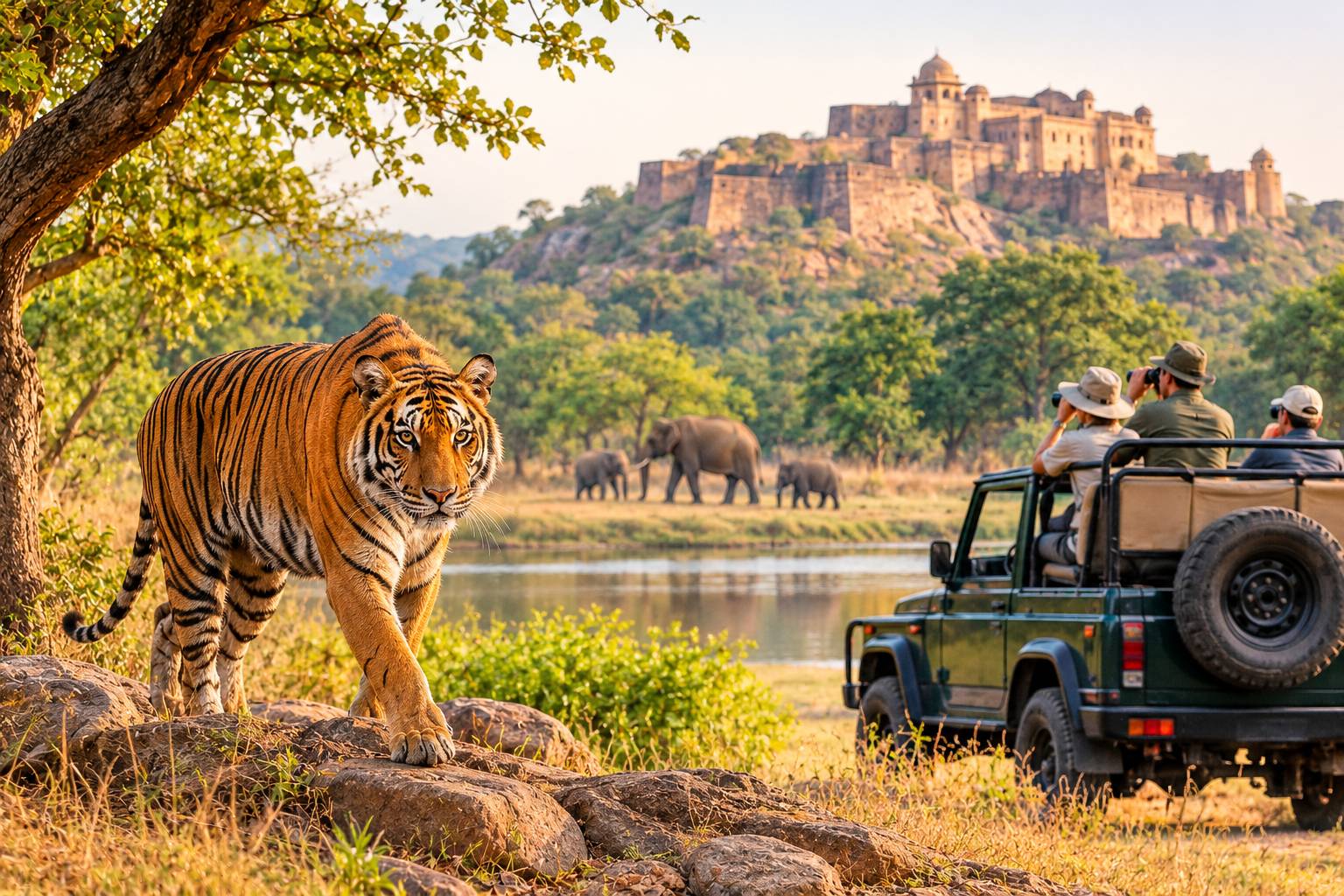
You have watched the documentaries and imagined the moment: a tiger stepping out of the grass, a rhino rising from the mist. Then comes the real question. India has dozens of parks, so where should your tiger safari in India begin?
Quick answer: Choose Ranthambore for tigers beside fort ruins, Jim Corbett for India’s oldest national park, and Kaziranga for one-horned rhinos. All three are open from mid-November to April, which makes it the easiest window to plan.
Jim Corbett called the tiger “a large-hearted gentleman with boundless courage” in Man-Eaters of Kumaon.
Why Is Choosing a Wildlife Park in India So Hard?
Lists of the Best Wildlife Destinations in India rarely explain the trade-offs. Every park has its own season, closes during the monsoon, and offers no guaranteed sightings. Choosing by animal, landscape and travel dates makes the decision much easier.
Which Are the Best National Parks to Visit in India?
Ranthambore: Tigers Among Ancient Ruins
In Rajasthan’s Sawai Madhopur district, Ranthambore has ten safari zones, with zones 1 to 5 considered the best for tigers. It became a tiger reserve in 1973. A Ranthambore safari runs from October to June, and core zones close from July to September.
Jim Corbett: India’s Oldest National Park
Set in Uttarakhand, Jim Corbett National Park was established in 1936, and Project Tiger was launched here in 1973. Uttarakhand’s Kumaon tourism site lists the park as closed from 16 June to 14 November. Jim Corbett Safari Packages therefore focus on the winter and spring months.
Kaziranga: Home of the One-Horned Rhino
Assam’s Kaziranga is a UNESCO World Heritage Site, inscribed in 1985. It is best known for one-horned rhinos, which tourism sources say make up about two-thirds of the world’s population. The park is generally open from November to April. A Kaziranga rhino safari suits a longer India itinerary.
5 Tips for Choosing Your Park
- Pick by animal first: tigers in Ranthambore or Corbett, rhinos in Kaziranga.
- Match your dates to each park’s open season.
- Book zones and lodges early, because popular safaris sell out.
- Plan more than one safari, since sightings are never guaranteed.
- Combine a park with a city route to save travel time.
Wildlife Tours for Travellers from Latin America and Spain
From Spain and Mexico
India Wildlife Safari Tours from Spain and India Tiger Watching Tours often begin in Ranthambore, because it fits neatly after Delhi, Agra and Jaipur. Guests comparing India Wildlife Tour Packages from Mexico can add India Wildlife Photography Tours, as tigers gather near water in the hot months.
From Argentina and Colombia
India Wildlife Safari Holidays from Argentina work well when combined with a heritage route. Travellers browsing India Wildlife Tour Packages from Colombia can use this guide to shortlist the Best Jungle Safari Destinations in India before asking for a quote.
Online Tour Company lists the Golden Triangle with Jungle Safari at $745 per person for 8 days. For Corbett or Kaziranga, ask for a tailor-made plan. See all India tour packages for more routes.
Ready to Plan Your Wildlife Journey?
Share your country, dates and group size with Online Tour Company through our contact page for a tailor-made wildlife itinerary.
Wildlife Tour FAQs
Which is better for tigers, Ranthambore or Jim Corbett?
Both are tiger reserves. Ranthambore offers fort scenery, while Corbett offers forest and history. Online Tour Company can match either to your route.
When can I visit all three parks?
Mid-November to April is when all three are open. Online Tour Company plans dates around each park’s season.
Where can I see one-horned rhinos?
Kaziranga in Assam is the best-known park. Online Tour Company can add it to a longer India itinerary.
Do I need to book safaris in advance?
Yes, popular zones fill quickly. Online Tour Company helps you plan travel dates around booking windows.
Can I book a wildlife tour from Spain, Mexico, Argentina or Colombia?
Yes. Online Tour Company arranges tailor-made wildlife tours for travellers from Europe and Latin America. More answers are on our FAQ page.


Comments are closed